Part load removals usually mean sharing van space with other customers to move your belongings. This approach can cost noticeably less than booking a dedicated lorry, but it gives you less control over dates and usually means you pack everything yourself. Because the term is used loosely in the UK trade, you must ask exactly what the quote covers before you pay a deposit.
What part load removals means
Removals is not a licensed trade and anyone can offer the service. Because of this, companies define a part load in different ways. At its core, it means you are buying a share of the space on a removal van that is already heading in your direction.
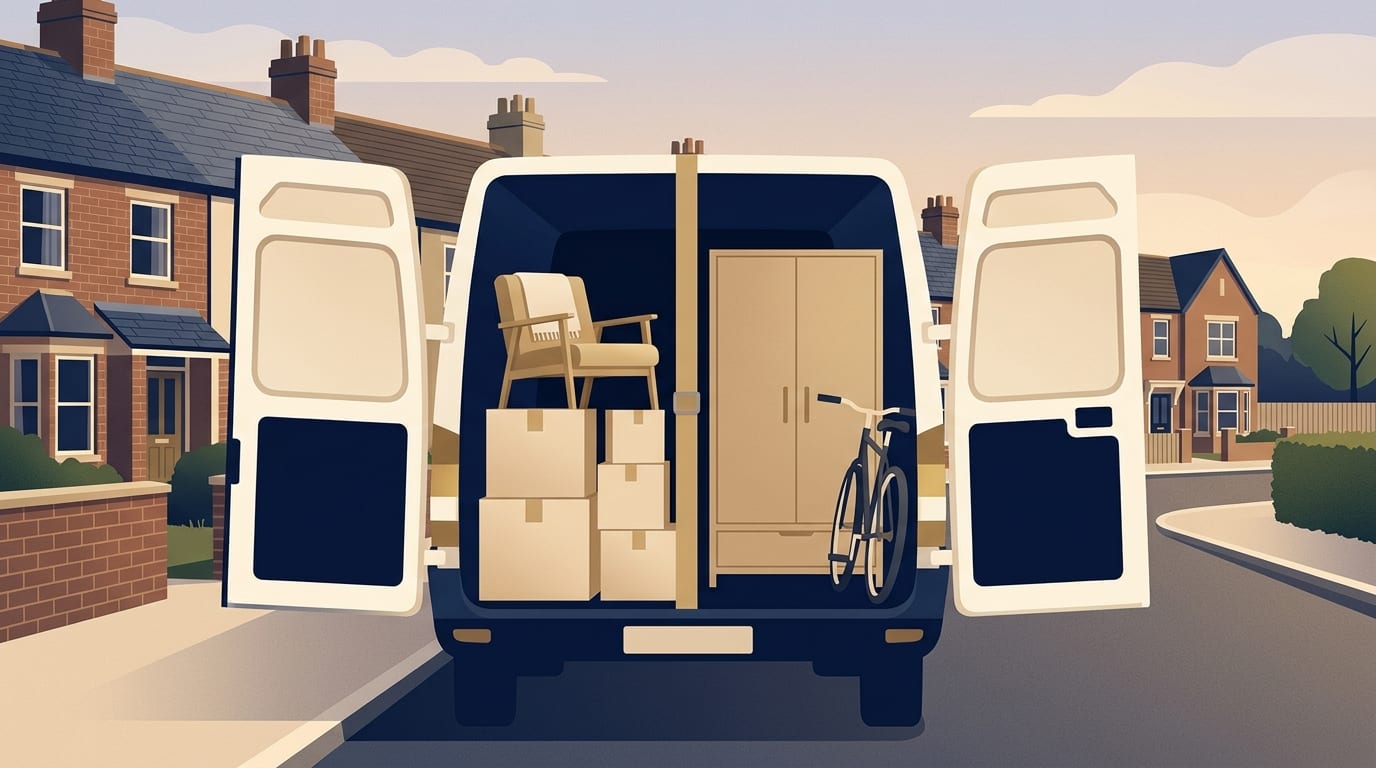
Instead of hiring a dedicated lorry and crew for your belongings alone, your boxes and furniture travel alongside goods owned by other people. The removal company may combine several smaller moves in one journey. You pay for the space your goods take up in the van, so volume still matters.
The price is driven by this volume, the distance, access at both ends, and the day and time of year. Location also plays a part, with London and the South East costing more than other regions. The trade off for the lower price is that you must be flexible, as you cannot dictate the exact time the van arrives.
How a shared van move works
A shared move operates differently from a traditional service. The removal company takes on the planning to make the route work for several customers at once.
Shared vehicle and routing
Several customers' goods travel in one vehicle, so the firm plans a single route to collect and deliver them. Ask how the route works and when you will know your final dates.
Flexible collection and delivery windows
You are unlikely to get a specific hour for your move. Instead, the company is likely to give you a flexible collection and delivery window, and you need to be ready during it. Ask how long the window is and how you will be told a more precise time.
Goods loaded with others
Your boxes and furniture will sit in the same vehicle as items belonging to strangers. Ask how the firm tracks what belongs to whom and keeps different loads separate in the van.
You pack yourself
Most part load prices assume you will pack your own belongings into boxes. The crew will load your sealed boxes and your furniture onto the van, but they do not provide a packing service. You must ensure every box is taped securely and strong enough to be stacked, as weak boxes may crush under the weight of other items during the journey.
Transport only
A standard shared service is for transport only. The crew will carry your items to and from the van, but disconnecting appliances and taking furniture apart may not be included, so ask. Dismantling and reassembly are your responsibility, so you must prepare large items before the crew turns up. Never attempt to disconnect gas appliances yourself, as this needs a Gas Safe registered engineer.
Typical prices compared with a full service
The table below shows typical 2026 prices for a local part load move of about 25 miles. Here a part load means a shared vehicle with flexible dates, where the firm provides transport only and you pack yourself.
|
Property size |
Typical part load price |
|---|---|
|
1-bed flat |
£250 |
|
2-bed house |
£355 |
|
3-bed house |
£590 |
|
4-bed house |
£760 |
|
5-bed house |
£930 |
These figures are typical 2026 prices including VAT, last updated in September 2026, and local quotes will differ based on access and your exact location. For comparison, the next table shows typical 2026 averages for a full service local removal of up to 50 miles.
|
Property size |
Typical full service price |
|---|---|
|
1-bed property |
£320 to £420 |
|
2-bed property |
£520 to £640 |
|
3-bed property |
£800 to £950 |
|
4-bed property |
£1,000 to £1,150 |
|
5-bed property |
£1,300 to £1,450 |
These full service figures are typical 2026 prices, updated in September 2026, and local quotes will differ. The two tables are not like for like. The first is a transport only service on flexible dates, while the second is a dedicated full service.
If you only have a few items, a man and van service is another option. This usually charges by the hour with a minimum booking. Typical 2026 rates are £50 to £80 per hour. As one example, a Luton van with two movers is priced at £86 per hour including taxes, and with three movers at £129 per hour. That is one provider's pricing, not a market rate. You can read more about choosing between these options in our guide on whether to book a man and van or removal company.
If you prefer to handle the driving and heavy lifting yourself, self drive van hire is available. Typical 2026 prices for van hire are £50 to £200 per day.
What you give up to get a lower price
The main thing you surrender is control over your moving dates. You cannot demand that the van arrives at a specific time on a Friday afternoon. You must fit your plans around the removal firm's schedule.
You also give up speed. A dedicated lorry drives straight from your old home to your new one. A shared van may make other stops along the way, so your belongings could spend longer in transit than on a dedicated lorry. Ask the firm how it handles longer routes.
Finally, you give up the protection that comes with professional packing. Standard industry terms commonly limit a remover's liability to a modest sum per item, for example £40 per item, unless a higher value is declared and paid for. Items the customer packed themselves are often treated differently, and damage claims are frequently refused because items were self packed or reported too late.
Who a part load suits and who it does not
This service suits people moving out of rented accommodation who have an overlap between their old and new tenancies. It works well for student moves, single items, and small flats where there is not much furniture. It can also suit a relative downsizing who only needs to move a few pieces.
A shared van does not suit buyers and sellers in a property chain. On a typical completion day, money must move through the banking system before the keys are released. Keys can be released late, which can mean waiting time charges from the removal firm. You cannot leave a shared van waiting because it delays the other customers on the route.
It is also a poor choice if you have highly valuable or fragile items. Unless the firm specifically confirms their handling methods and provides adequate cover, you should not send delicate antiques on a shared van.
Dates and booking lead time
Removal companies fill up four to six weeks in advance. You must book early to secure space on a shared van, especially if you are moving during a busy period. Month ends, Fridays and summer are busiest, so dates there book up first.
The peak season for moving house covers the summer months and the end of any month. Moving during this peak season adds around 17 per cent to the transport cost. Mid week moves are often cheaper.
Book your space once your dates are reasonably firm. Do not pay a deposit until you know exactly when your tenancy ends or when your landlord expects you to leave.
Insurance and what to check
Goods in transit insurance often covers only around £40 to £50. You must ask for the liability terms in writing and check what your home contents insurance covers during a move. Under the Consumer Rights Act 2015, the service must be carried out with reasonable care and skill, at a reasonable price if none was agreed, and within a reasonable time.
Check the cancellation and postponement terms carefully. Under the Consumer Contracts Regulations 2013, the usual 14-day cancellation right does not apply to transport of goods booked for a specific date. The firm's own cancellation and postponement terms are what count, and you must read them before you pay a deposit.
You should also check if the company is VAT registered. Some smaller part load and man and van operators are not VAT registered, which can make their quotes look lower. Always ask if the price you are quoted includes VAT.
Look into the company's background to ensure they are legitimate. A business running goods vehicles over 3,500 kg gross weight must hold a goods vehicle operator's licence. This applies to removal lorries but not to a standard van. Check the business address and look for reviews over time to avoid firms that cancel late or do not turn up.
Check for membership of the British Association of Removers (BAR). This is a voluntary sign of standards, not a legal requirement, and many sound smaller firms are not members. BAR members follow a Code of Practice monitored by the Chartered Trading Standards Institute. They are audited annually, offer an Advanced Payment Guarantee that protects deposits if the member fails, and give access to a free independent dispute resolution service.
A quote given without seeing the contents that rises on the day is a common problem. Extra charges for stairs, distance from the door or waiting that were never mentioned can also inflate a cheap quote. You can learn more about the warning signs in our guide on how to spot a rogue removal firm before you pay a deposit.
When budgeting for your move, remember that Stamp Duty Land Tax applies to house purchases in England and Northern Ireland, with different taxes in Scotland and Wales. You can find the current rates on GOV.UK.
Questions to ask before you book
Before you agree to a part load service, ask the company these questions to understand exactly what you are paying for:
- Does this quote mean my belongings will share a van with other customers?
- Do you provide a fixed collection date, or a flexible window?
- What happens if the collection window slips or the van does not turn up?
- Are there extra charges for stairs, a long carry from the door, or restricted access?
- What is your liability limit, and what does your goods in transit cover include?
- What are your cancellation and postponement charges if my dates change?
- Will your own staff complete the delivery, or is the work passed to an unknown subcontractor?
- Does this quote include VAT?
When a full removal is the better choice
A full removal service is the better choice if you are buying and selling in a property chain. A removal company normally gives a fixed written quote after a pre-move survey. This survey is a home visit or video call to assess your volume and check the access at your property.
The firm then sends a dedicated lorry and crew sized specifically to your job. Because the vehicle is yours alone, you have more say over the schedule. If your keys are released late, ask what the firm will do.
A survey-based quote for a dedicated vehicle sized to the job makes a van that is too small, and extra trips at extra cost, less likely. A full service also gives you the option to add a full packing service or fragile only packing. Items the customer packed themselves are often treated differently from items the firm packed, so ask the firm what its terms say.
Some dedicated removal firms can also help with a parking suspension or permit, and offer storage if there is a gap between moving out and moving in, so ask what yours provides. If you are looking for ways to keep costs down without sharing a van, read our guide on finding cheap removals safely.
Common questions
Will my items get mixed up with someone else?
Ask the firm how it tracks every box and piece of furniture and keeps different loads separate. Always label your boxes clearly with your name and destination to help the crew.
Do part load movers assemble furniture?
A part load is described as transport only, so dismantling and reassembly may not be included. You may need to take apart your beds, wardrobes and dining tables before the crew arrives. If you need this service, you must ask for it and expect to pay an extra fee.
How long will delivery take on a shared van?
Delivery times depend on the route and the other customers' goods, and no typical time is given here. If your new home is the last stop on a long journey, you will wait longer for your goods to arrive. You must ask the firm for a realistic delivery window.
Can I book a part load for completion day?
It is highly risky to book a shared van for a house purchase completion day. Keys can be released late, and a shared van cannot wait for you without delaying other customers. A dedicated removal service is necessary when legal deadlines and tight handovers are involved.
Next steps for your move
To get organised and make a sound choice, follow these steps:
- Get about three written quotes based on a survey or a detailed list of your items.
- Compare what is included in the price, not just the total figure.
- Declare anything heavy, fragile or valuable, and explain any access problems at either end.
- Check the business address, read reviews over time, and verify any BAR membership claim on the BAR's own site.
- Ask for the liability terms in writing and check your home contents insurance.
- Note any damage on moving day and report it to the firm in writing promptly.
When you are ready to start comparing prices and availability for your own move, you can use our directory to find a mover near you.
Find a top rated mover near you
2,924 movers across the UK, each ranked on their Google rating and the number of reviews behind it. Start with your county: