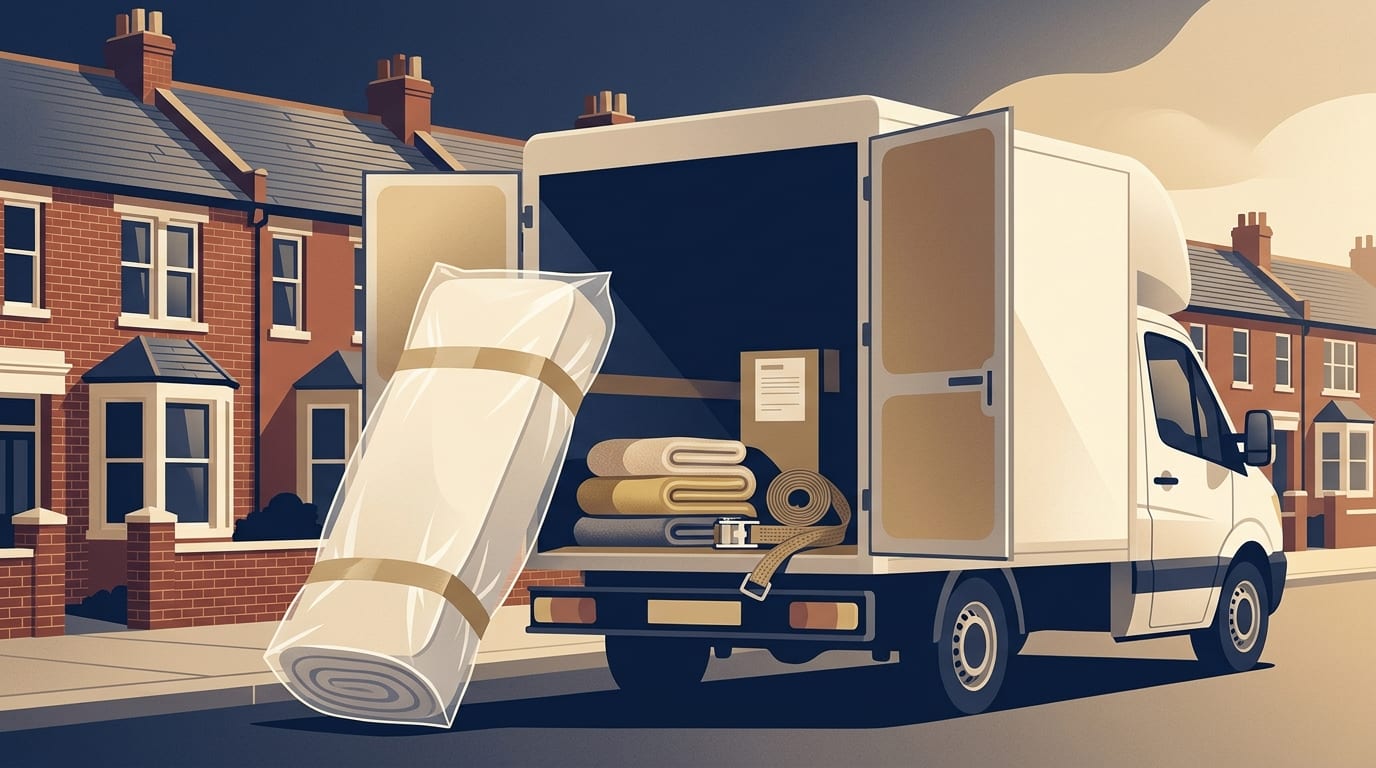

A wardrobe box is a tall cardboard carton fitted with a hanging rail across the top. It allows you to move clothes straight from your wardrobe to the box while keeping them on their hangers. Wardrobe boxes will keep your clothes crease-free, but they are expensive.
These specialist cartons come in different sizes to suit different types of clothing. Sizes vary by supplier. A short wardrobe box can measure 508 by 451 by 1016 millimetres, suited to clothes such as tops, trousers and children's clothing, and a tall wardrobe box 508 by 451 by 1220 millimetres, designed for long items such as dresses. Some cartons are listed at 1,240 millimetres tall.
You must check what is included when you buy these cartons. Some tall boxes are sold without the hanging rail pictured. Always check the product description to confirm the hanging bar is in the package before you pay.
Do removal firms supply wardrobe boxes?
A removal company may provide wardrobe boxes for your move, but this is likely to be at a price. Ask for them in the written quote. You should ask the removal firm whether they supply them and exactly what they cost.
The removals trade is not a licensed industry and anyone can offer moving services. The main trade association is the British Association of Removers, known as the BAR. Membership is a voluntary sign of standards, not a legal requirement, and many sound smaller firms are not members. Under the BAR Code of Practice, which is monitored by the Chartered Trading Standards Institute, members must provide fixed price written quotations with a clear description of the work. Clause 5.4 of the Code states that the packing materials and method used must be suitable for the purpose required. You can read the full BAR Code of Practice online.
To ensure you have the right boxes, a good removal firm will normally carry out a pre-move survey. This is a home visit or video call to assess the volume of your belongings and check the access at your property. Volume simply means how much there is to move, which sets the vehicle size and the number of crew needed. During the survey, show the surveyor your wardrobes so they can calculate how many tall cartons you will need. Ask for the cost of these boxes to be included in your fixed price written quote.
How much does a wardrobe box cost?
Wardrobe boxes are expensive compared with standard moving boxes. The table below shows a range of prices for different sizes of wardrobe box.
|
Box type |
Size |
Listed price |
|---|---|---|
|
Short wardrobe box |
508 x 451 x 1016 mm |
£8.00 |
|
Tall wardrobe box |
508 x 451 x 1220 mm |
£9.50 |
|
Wardrobe box with hanging bar |
51 x 45 x 122 cm |
£10.00 |
|
Clothes box with bar |
Not stated |
£11.00 |
|
Tall wardrobe carton |
1,240 mm tall |
£12.50 |
These are typical prices and they vary by firm. The £12.50 carton is a 2026 price, the £8.00 and £9.50 boxes are 2020 prices, and the £10.00 and £11.00 boxes are 2024 average prices, so check current prices. Another 2026 estimate puts wardrobe boxes at approximately £12 each, and delivery fees may apply.
For comparison, moving boxes cost £2.00 to £3.50 in 2020 prices. In 2026 prices, a small cardboard box is £4.00, a medium box is £5.00 and a large box is £6.00. Moving blankets are listed at £20 to £28 each. The total cost of your packing materials will depend heavily on the volume of your belongings and how many specialist cartons you need.
How to pack clothes on hangers in a wardrobe box
Packing clothes into a wardrobe carton is a fast process. It is far quicker to simply lift your clothes out of your wardrobe and hang them in a box than it is to fold them all. Follow these steps to how to pack for moving house room by room when dealing with hanging garments.
- Check that the wardrobe box has its hanging rail.
- Group your garments together inside your actual wardrobe.
- Bundle about six hangers together at a time.
- Slip a rubbish sack over the bundled garments to protect them from dust and dirt.
- Lift the bundle out of the wardrobe and hook the hangers onto the rail inside the box.
- Close and seal the box.
Keep the bundles manageable and make sure the hangers slide freely on the rail.
Cheaper ways to move clothes on hangers
Wardrobe boxes will keep your clothes crease-free, but they are expensive. If you have a large family or multiple wardrobes, buying specialist cartons for every hanging garment will quickly inflate your moving costs. Fortunately, there is a cheaper alternative.
There is no need to take clothes off their hangers to save money. Instead, leave the clothes on their hangers and cover them with a good-quality bin liner. Pull the bin liner up from the bottom of the garments so the hanger hooks poke through the top of the plastic. Tie the bottom of the bag to completely seal the clothes inside. This protects the clothes from dust.
When you arrive at the new house, carry the bundles inside, hook them onto the new rail, and pull the bin liners off. The clothes are unpacked instantly and remain on their original hangers.
How to pack folded clothes and drawers
Not all clothes need to be hung up. For garments that usually sit in drawers or on shelves, you will need standard cardboard boxes. Prevent creasing by rolling them into tube shapes rather than folding them flat. Use medium-sized boxes for clothes, placing heavy items at the bottom and lighter items on top.
Vacuum pack bags for clothes can mean you fit more in a box. Bin bags can hold soft items that do not need a box, and lightweight items can go in bin bags to fill awkward spaces in the removal van.
If you are moving a chest of drawers, you do not always need to empty it completely. Drawers holding unbreakable items such as socks need not be emptied. Leaving lighter contents in place keeps the unit more rigid during transport. However, you must unpack drawers that are heavy or contain breakables.
As an alternative to buying cardboard boxes, you can hire hard plastic crates. Crate hire at 2020 prices was £3 per crate per week for a 60-litre crate, £4 for an 80-litre crate and £8 for a 200-litre crate, though delivery fees may apply. Estimates for hiring crates for a whole home in 2026 are about £60 per week for a one-bedroom home, £85 for two to three bedrooms and about £100 for three to four bedrooms, each including a sack truck or barrow and bubble wrap. These are estimates, so verify current prices with providers.
Moving a wardrobe itself
Large wardrobes are heavy and difficult to navigate through narrow doorways or tight staircases. The surveyor will assess the access at both ends to see if a long carry or restricted access will complicate the job. A business running goods vehicles over 3,500 kg gross weight must hold a goods vehicle operator's licence. This applies to standard removal lorries but not to a standard transit van. A full removal company will send a lorry sized to fit large bedroom furniture, whereas a man and van service usually charges by the hour with a minimum booking and suits smaller loads such as flats.
Some wardrobes may need to be taken apart. Under clause 3.6 of the BAR Code, services a customer might expect but which would not normally be provided include dismantling and erecting bedroom and kitchen furniture. You must ask the removal firm if they will do this for you.
If you want the crew to dismantle the wardrobe, ensure it is clearly listed in your written quote. If it is not listed, ask what the crew will do. The guide on whether removal companies dismantle and reassemble furniture has more detail.
Who is liable if packed clothes arrive damaged?
When you hire a removal company, they offer different levels of packing service. You can choose a full packing service, fragile-only packing, or packing yourself. Professional packers typically pack within a day. The BAR Code clause 1.1 states that members must safely handle and adequately protect customers' effects.
If you choose to pack your clothes and belongings yourself, your cover may differ. Many insurers will not cover items you packed yourself. Damage claims are frequently refused because items were self-packed or because the damage was reported too late. Standard industry terms commonly limit a remover's liability to a modest sum per item, for example £40.00 per item, unless a higher value is declared and paid for. You must ask for the firm's liability terms in writing and check what your home contents insurance covers during a move.
Under the Consumer Rights Act 2015, the removal service must be carried out with reasonable care and skill, at a reasonable price if none was agreed, and within a reasonable time. If the service was not carried out with reasonable care and skill, Citizens Advice says you can ask the trader to redo the service if possible or ask for a discount. For problems you did not notice straight away, you can ask for things to be put right for up to 6 years in England. Note any damage on the day and report it in writing promptly. You can read more about your rights on the Citizens Advice website.
Common questions
Can I leave clothes in my wardrobe when moving house?
The usual advice is to lift your clothes out of the wardrobe and hang them in a wardrobe box, or to leave them on their hangers under a good-quality bin liner. Ask your removal firm before moving day if you hope to leave anything inside a wardrobe.
Are wardrobe boxes worth the money?
Wardrobe boxes keep clothes crease-free, but they are expensive. Covering your clothes on their hangers with a good-quality bin liner is a cheaper alternative that protects them from dust.
How many moving boxes for clothes will I need?
This depends on the volume of your wardrobes. Ask the surveyor to estimate how many wardrobe boxes you need, and ask for their cost in the written quote.
Will a man and van service provide wardrobe boxes?
A man and van service usually charges by the hour with a minimum booking. Ask the firm whether it supplies wardrobe boxes and at what price, because a removal firm providing boxes is likely to charge for them.
Next steps before packing day
Getting your clothes packed safely requires planning. Moving dates book up quickly, especially on month ends, Fridays and during the summer. Book your removal firm once your completion dates are reasonably firm, and follow these steps to secure the right service.
- Get about three written quotes based on a physical or video survey.
- Compare what is included in each quote, not just the total price at the bottom.
- Ask the surveyor to include the cost of wardrobe boxes in the written quote.
- Check the firm's business address, their reviews over time, and their goods in transit cover.
- Ask for the liability terms in writing and check the limit per item.
- Ask about cancellation and postponement charges in case your completion date moves.
- Declare any heavy furniture, access problems or parking restrictions at either end.
Under the Consumer Contracts Regulations 2013, the usual 14-day cancellation right does not apply to transport of goods booked for a specific date. This means the firm's own cancellation and postponement terms are what count, so read them carefully before paying a deposit. BAR members offer an Advanced Payment Guarantee that protects deposits if the member fails before the move. Once you understand the costs and the terms, you can find a mover near you to get your clothes safely to your new home.
Find a top rated mover near you
2,924 movers across the UK, each ranked on their Google rating and the number of reviews behind it. Start with your county: