When sorting out gas and electric when moving house, you must tell your current suppliers you are leaving and tell the suppliers at the new property you have arrived. You need to take accurate meter readings on both moving out and moving in days because your final and initial bills follow those exact readings. Doing this promptly stops you paying for energy used by the previous or next occupants.
What to sort out before moving day
Moving day is always busy, and trying to handle energy suppliers while directing a removal crew can easily lead to mistakes. Taking the time to organise your utility accounts before the removal van arrives will save you a lot of stress. You need to identify who currently supplies the gas and electricity to the home you are buying or renting. The seller, the landlord or the letting agent should be able to tell you this information before you arrive.
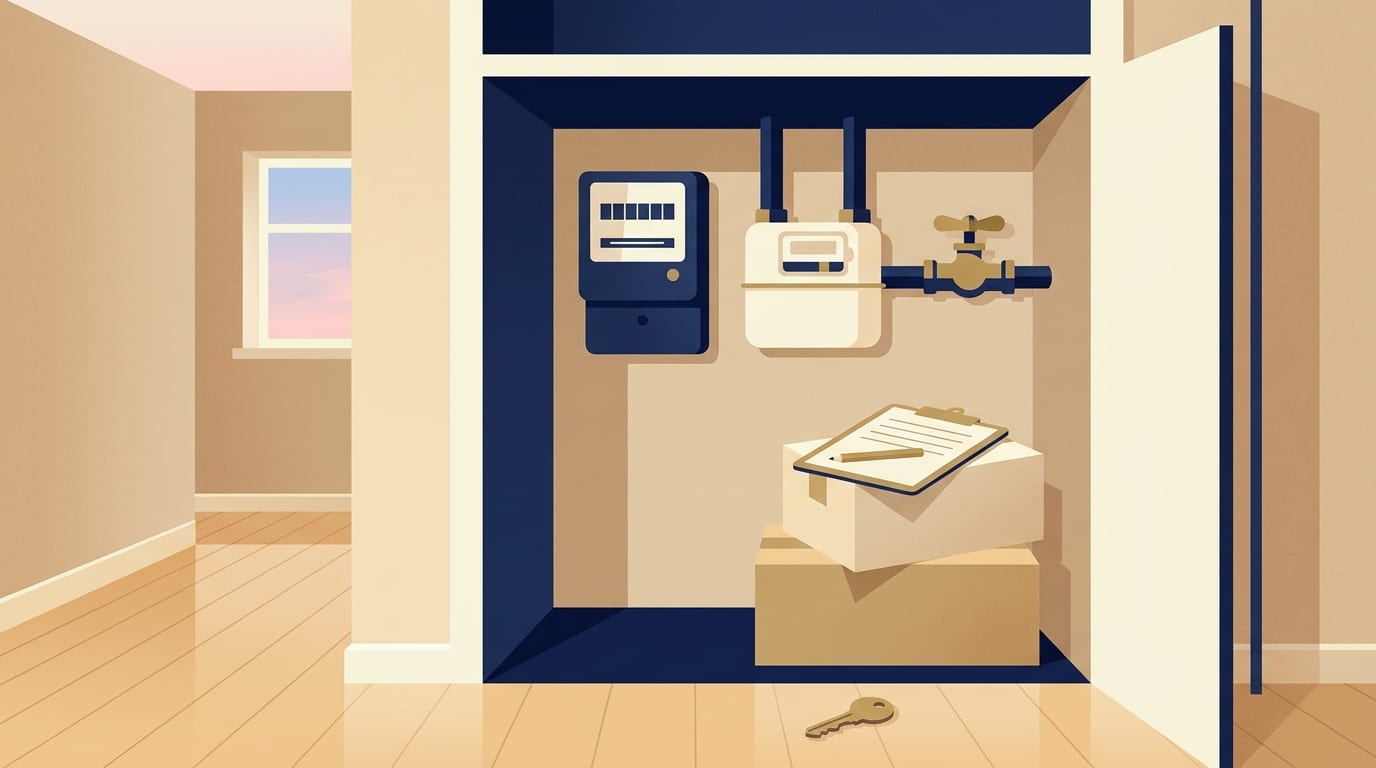
You also need to know where the meters are located in both your old home and your new one. Finding a meter in the dark on moving day is frustrating, so ask the previous owner for the locations ahead of time. Meters can be hidden in cupboards under the stairs, in external wall boxes, or even in a communal hallway if you are moving into a flat.
Here is the correct order of tasks to follow when sorting out your utilities for a house move.
- Find out who supplies the gas and electricity at your current home and your new property.
- Check if your new home has a standard, smart or prepayment meter installed.
- Give your current energy and water suppliers the required notice that you are moving out.
- Take final meter readings just before you lock the door of your old home for the last time.
- Take opening meter readings as soon as you arrive at the new property.
- Contact the suppliers at the new property to set up your account and provide the opening numbers.
A good way to stay organised is to add these tasks to your weekly moving checklist. Sorting out your energy providers early is a key part of updating your address details across all your important accounts.
How much notice to give your suppliers
Energy and water companies require advance warning that you are leaving a property. This gives them time to prepare your final bill and close down your account on the correct date. If you fail to give enough notice, you risk being charged for energy or water used by the people who move in after you. Giving notice also lets the supplier send your final bill to the right address.
This table shows the minimum notice periods and reading days required for your utility accounts.
|
Utility type |
Minimum notice to give |
When to read the meter |
|---|---|---|
|
Gas and electricity |
At least 48 hours |
The day you move out |
|
Water |
At least five working days |
The day you move out |
These are the minimum notice periods given by Citizens Advice and the Consumer Council for Water, though individual companies may ask for more, so check your own supplier's terms.
According to Citizens Advice, you should give your gas and electricity suppliers at least 48 hours of notice before you move. Some suppliers prefer more warning, so checking your specific account terms a few weeks before completion day is a sensible step. You will need to provide them with your new address so they know exactly where to send the final bill. You will also need to contact your local authority about closing your tax account at the same time.
Meter readings on the day you move out
The most important task regarding your energy on moving day is recording exactly what you have used. You must read your meters on the day you move out and give the readings to your supplier. This draws a clear line under your energy usage and proves exactly where your responsibility ends. Without this reading, your final bill may not reflect what you actually used.
It is highly recommended that you keep a record of the readings and the dates you took them. Taking a clear photograph of the meter face with your smartphone is the easiest way to do this. Make sure the numbers are readable and the camera flash has not caused a glare over the digital display. This photograph acts as solid evidence in case you ever need to dispute the final bill with your old supplier.
Once you have submitted your final readings, you must pay your final bill to your old supplier. They will send this document to the forwarding address you provided when you gave them notice. Sometimes, your final bill shows you are actually in credit, perhaps because you overpaid on a monthly direct debit over the summer months. If this happens, your old supplier must refund the credit to you within 10 working days of sending you the final bill.
Meter readings on the day you move in
When you arrive at your new home, taking opening meter readings should be one of your first jobs before the removal van is unloaded. You must read your meters on the day you move in and give the readings to the current supplier at the new property. Doing this immediately protects you from paying for energy used by the previous owner or tenant before you arrived.
You might not know who the current supplier is when you first walk through the door. Even if you have to wait a day or two to find out, taking the reading on the actual day you move in locks in the correct figures. Write the numbers down or take another photograph so you have the exact digits ready when you do make contact. Providing accurate opening numbers helps the supplier produce an accurate first bill for your new account.
If you cannot find the meters, check the usual places like the front porch, the garage, or a dedicated utility cupboard. External meter boxes may be locked, so ask the seller, landlord or letting agent whether there is a key and where it is kept. If you are moving into a newly built home, the site manager or developer will show you where the meters are during your handover tour.
Why you start on a standard tariff and when you can switch
Moving into a new house means taking over the existing energy supply, rather than bringing your old supplier with you. When you move in, you are automatically placed on a deemed contract with the supplier of your new home. A deemed contract is the arrangement you are placed on with the supplier of your new home, even though you have not signed a new agreement with them.
This deemed contract ensures your new home has a continuous supply of gas and electricity and is not suddenly cut off when the old owners leave. However, being on a deemed contract usually means you are placed on the supplier's default or standard variable tariff. These default tariffs are rarely the cheapest option available on the market, so you will likely want to change it.
You might want to switch to a cheaper deal or move back to your previous supplier immediately, but there are strict rules about when you can do this. You must wait to switch until the day you become responsible for the property. Once you have officially completed the purchase or your tenancy agreement has started, you are free to shop around. You can then contact a new provider and begin the switching process.
Prepayment meters and debt left on the meter
Some homes have prepayment meters, where you pay for your energy in advance. If you arrive at your new property and find a prepayment meter installed, you need to handle it carefully to avoid losing money. You must contact the current supplier straight away to tell them you have moved in.
The previous occupants might have left their old top-up key or card behind in the property. You should try not to use a key or card, or put any money on the meter, until you have spoken to the supplier. Any debt left on the meter by the previous occupants is the reason to speak to the supplier first.
When you contact the supplier, you must ask them to take any debt off the meter. This ensures you start with a clean slate and do not pay for debts left by previous occupants. The supplier will tell you how to get a key or card of your own. Wait for their advice before you add credit.
Smart meters
Smart meters are designed to send your energy usage data directly to your supplier, removing the need for manual meter readings. However, they do not always function perfectly when a property changes hands or when a customer switches to a new energy provider. You should check the meter is working in smart mode before you move out of your old home.
Smart mode means your meter sends automatic readings to your supplier without you having to do anything. If the meter has lost its connection or is an older generation model that has dropped out of smart mode, it will not send the data. If it is not working in smart mode, you must take a final manual reading and give it to your supplier yourself.
You should apply the exact same caution when arriving at your new property. Even if a modern smart meter is installed on the wall, it might not be communicating with the current supplier. Take a manual reading on the day you move in regardless of whether the meter looks like it is working. This guarantees you have the figures you need if the automatic system fails to register your arrival.
Water bills and metered homes
Dealing with your water supply follows a similar process to your gas and electricity, but the required notice periods are slightly different. The Consumer Council for Water states that you must notify your water company at least five working days before leaving to get a final bill. Giving them this full working week of notice ensures they can close your account accurately on your moving day.
Water is billed in two different ways in the UK, depending on whether the property has a water meter fitted. In a home with a water meter you must pay metered charges based on your usage, just like your gas and electric. This means every time you run a tap, use the washing machine or flush a toilet, it adds to your total bill.
If you are moving from a home with standard fixed charges to one with a meter, you cannot change the setup. You cannot switch to an unmetered bill once a water meter has been installed at a property. Because you will be paying for exactly what you use, you should read the meter as soon as you move in and give that figure to the water company.
Northern Ireland and other local differences
The rules for handling utility accounts can vary slightly depending on where you live in the UK. If you are moving house within Northern Ireland, the process for notifying your energy providers is governed by local regulators rather than mainland consumer bodies. The Utility Regulator for Northern Ireland advises that you must take a final meter reading on the day you move out.
When you arrive at your new property, you must give the existing supplier a meter reading and your details on arrival. If you fail to do this, you could end up covering the previous occupant's bills for the energy they used before they left.
Unlike the 48 hours Citizens Advice gives for gas and electricity, the Utility Regulator page does not specify a notice period for telling your supplier you are moving, so no figure can be given here. What the page does ask for is a final reading on the day you move out and a reading plus your details on arrival.
Common questions
How do I change gas and electric supplier when moving house?
You must wait until you are legally responsible for the new property before you can start the switching process. First, you need to set up an account with the existing supplier at the new home using your move-in meter readings. Once you have done that and your name is on the account, you are free to shop around and move to a different provider.
What happens if I forget to take a move out reading?
If you forget to check your meters on the day you leave, give your supplier a reading as soon as you can and tell them the date it was taken. Without a reading from the day you left, you may be billed for energy used after you moved out, so keep any photographs and notes in case you need to dispute the final bill.
What if my new home has a smart meter?
Check that it is working in smart mode, which means it sends automatic readings to the supplier. If it is not, take a reading on the day you move in and give it to the current supplier.
Can I disconnect my gas cooker to take it to the new house?
You must never attempt to disconnect a gas cooker, gas fire or any other gas appliance yourself. This work is highly dangerous and must be carried out by a Gas Safe registered engineer. Book a Gas Safe registered engineer well before your move so the appliance is safely disconnected and ready for the removal team.
Next steps for your move
Getting your utility accounts in order is a simple process if you follow the correct sequence and communicate clearly with your suppliers. Completing these tasks on time ensures you only pay for the energy and water you actually use.
- Find out who supplies the gas, electricity and water at your new property by asking the seller or letting agent.
- Give your current suppliers the correct notice before you move out.
- Pack a moving day bag with a torch and your phone so you can easily find the meters and take clear photographs of the readings.
- Note the locations of all meters at both properties so you are not searching for them while the removal crew is trying to work.
- Register your details with the new suppliers as soon as you have the keys.
When you have your completion date confirmed and your utility notice periods in hand, it is time to find a mover near you to get your belongings safely to the new house. Booking your removal firm early ensures you secure your preferred date and gives you the peace of mind to focus on packing.
Find a top rated mover near you
2,924 movers across the UK, each ranked on their Google rating and the number of reviews behind it. Start with your county: